
Explore expert articles, machinery updates, technical guides, and industry insights from ReformMak.
Precision-engineered vertical form-fill-seal machines optimized for high-speed pouch dosing of powders, liquids, and granules in humid tropical operational climates.
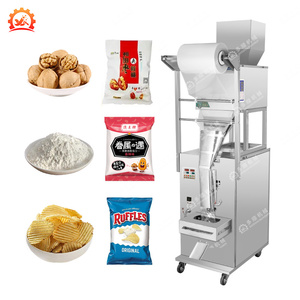
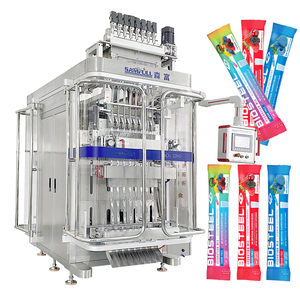
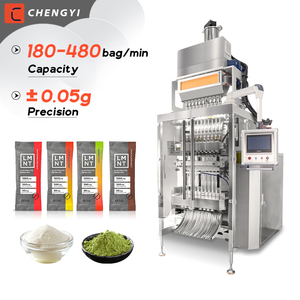
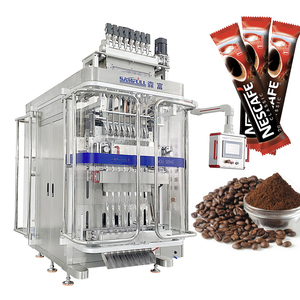

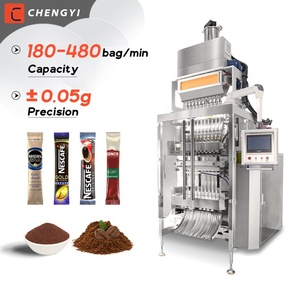
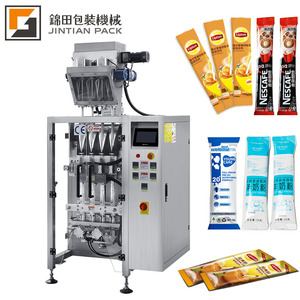
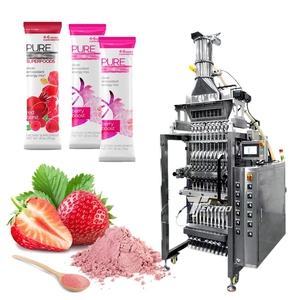
Panama occupies a unique geographic and financial nexus in Latin America. As home to the Panama Canal and the Colón Free Trade Zone (Zona Libre de Colón), the nation serves not merely as a localized consumer market but as a primary re-export hub for Central America, the Caribbean, and northern South America. For contract packagers, food manufacturers, and pharmaceutical re-packagers operating within Panama City, Tocumen Industrial Park, and Colón, investment in high-precision Three Side Seal Packaging Machines represents a critical lever for operational scalability and export compliance.
Unlike traditional 4-side seal sachets or standard pillow bags, the 3-side seal format strikes an optimal balance between structural material economy and graphic branding area. By utilizing a folded web edge on one side and thermal seals on the remaining three, manufacturers save up to 12% in flexible laminate consumption per package while presenting a clean, flat profile highly suited for secondary cartoning and retail pegboard displays. In Panama’s rapidly growing food processing sector—encompassing specialty coffee blending in Chiriquí, white sugar portioning, localized spice processing, and nutraceutical drink mix packaging—demand has shifted rapidly toward high-speed, multi-lane machinery capable of meeting international export standard tolerances.
Optimized for Colón Free Zone operations where bulk imported commodities (sugar, dry milk, powdered supplements) are re-dosed into retail 3-side seal sachets for regional Latin American logistics.
Designed specifically to process multi-layer metallic foils (PET/AL/PE, PET/MPET/PE) to prevent moisture ingress in Panama's high relative humidity environment (>85% RH).
Configurations ranging from single-lane versatile batch units (DZD-420B series) to 8-lane high-speed VFFS engines running continuously at over 320 packets per minute.
Achieving consistent volumetric fill accuracy and seal hermeticity at high line speeds requires strict mechanical synchronization across film feeding, tension control, dosing, vertical sealing, cross-sealing, and cutting stages. For Panamanian plants handling fine powders (such as instant coffee, electrolyte drink mixes, or dietary proteins) or hydroscopic granules (refined sugar, sea salt), sub-standard sealing technology inevitably leads to micro-leaks, product clumping, and accelerated shelf-life deterioration.
Our machinery architecture incorporates independent servo-motor drive systems for web unwinding and horizontal seal jaw actuation. By decoupling mechanical linkages in favor of multi-axis PLC servo synchronization, the sealing dwell time can be digitally adjusted independent of machine speed. This ensures that thick aluminum barrier films receive exact heat integration and clamping pressure without scorching or film stretch.
| Performance Metric | 3-Side Seal Sachet | 4-Side Seal Sachet | Stick Pack (Pillow/Lap) |
|---|---|---|---|
| Film Utilization Efficiency | High (~12% Material Savings) | Moderate (Four-edge seam consumption) | Maximum (Narrow web width) |
| Print Branding Area | Large Flat Face (Front & Back) | Large Flat Face with Border Seals | Limited (Narrow aspect ratio) |
| Dosing Accuracy (Auger/Volumetric) | ±0.05g to ±0.1g | ±0.05g to ±0.1g | ±0.08g to ±0.15g |
| Tropical Climate Seal Integrity | Superior (Folded edge reduces leak points) | High (4 sealed edges) | Moderate (Fin seal intersection) |
| Cartoning Integration Compatibility | Seamless (Flat stacking) | Seamless (Flat stacking) | Requires specialized collating |
Operating industrial packaging machinery in Panama introduces distinct environmental challenges. Ambient relative humidity in regions such as Panama City, Colón, and David frequently exceeds 85% to 90%, accompanied by ambient temperatures averaging 30°C to 34°C year-round. Standard off-the-shelf packaging machinery often suffers from early electrical enclosure condensation, pneumatic solenoid failure, pneumatic tube degradation, and hygroscopic powder bridging inside dosing hoppers.
To address these specific localized operational realities, our export-grade 3-side seal machines incorporate full Tropicalized Engineering Protocols:
Selecting an OEM supplier for automated packaging machinery involves evaluating long-term technical reliability, spare parts availability, and engineering agility. As an established global exporter with thousands of units commissioned worldwide, our manufacturing ecosystem provides complete end-to-end assurance for Panamanian enterprise clients.
Every unit undergoes strict quality control protocols, full-load dry running tests, and electrical safety verification conforming to international ISO 9001:2015 and CE standards before crating.
We manufacture custom knife cut-off profiles (straight, zigzag, micro-perforation, round corner, easy-open tear notch) tailored to your marketing and brand specification needs.
Leveraging direct ocean freight routes from our factory to Puerto Balboa and Manzanillo International Terminal (MIT), we ensure efficient delivery schedules and air-freight spare parts dispatch.
To assist Panamanian project managers, procurement directors, and plant engineers in making informed capital equipment investments, we have compiled detailed answers to the most frequently asked technical and operational questions.
Answer: Panama operates primarily on 120V / 240V at 60Hz. We custom-configure all main drive motors, heating elements, PLCs, and servo transformers to match your plant's exact power supply (e.g., 220V 3-Phase 60Hz or 440V 3-Phase 60Hz), eliminating the need for step-down transformers.
Answer: We equip our machines with servo-driven augers featuring horizontal agitator blades, Teflon-coated contact hoppers, and optional ultrasonic/vibratory assistance to ensure consistent volumetric flow without rat-holing or bridging.
Answer: Yes. Our advanced PID temperature control modules and optional ultrasonic sealing systems allow precise seal window management required for heat-sensitive recyclable mono-materials and biodegradable film structures.
Answer: Standard machine build cycles range from 20 to 35 days depending on lane count and custom options. Direct container shipping from major ports to Panama's Caribbean or Pacific terminals typically takes 22 to 30 days transit time.
Answer: We provide comprehensive English/Spanish digital operating manuals, step-by-step video commissioning tutorials, remote PLC diagnostics via Wi-Fi modules, and on-site engineering dispatch for line setup and operator training in Panama.
Answer: All wear-and-tear components (heating elements, thermocouples, cutting blades, Teflon tapes, O-rings) utilize globally available standardized brands (Schneider, Omron, SMC, Festo). Replacement kits are also stocked and shipped via international express (DHL/FedEx) within 48 hours.
To maximize Equipment Operational Efficiency (OEE) and achieve a 98%+ uptime ratio, Panamanian production teams should institute standardized operating procedures tailored to vertical form-fill-seal workflows:
1. Web Tension Calibration: Prior to starting production runs, ensure the automatic roll unwinder's pneumatic dancer arm is adjusted to match film gauge thickness. Excessive web tension induces film necking, resulting in uneven 3-side seal widths, while insufficient tension causes tracking wander across the photo-eye sensor.
2. Thermal Seal Jaw Maintenance: Inspect seal jaw serrations daily for carbonized powder residue. Clean jaws exclusively with brass wire brushes while warm to avoid damaging protective coatings or thermocouple probes. Ensure seal bar pressure spring tension is balanced across both left and right sides to prevent asymmetrical seal integrity.
3. Environmental Moisture Control: In high-humidity maritime facilities, keep raw film rolls stored in climate-controlled areas until immediate mounting. Cold film rolls brought into warm, humid processing rooms can develop surface condensation, leading to seal delamination and optical registration eye errors.
Consult with our senior packaging automation engineers to receive a customized floorplan layout, complete technical specification proposal, and competitive FOB/CIF quotation for your facility.
Inquire Now