
Explore expert articles, machinery updates, technical guides, and industry insights from ReformMak.
Explore our export-ready multi-lane powder stick pack and sachet packaging equipment engineered for high operational efficiency, low dust dispersion, and strict dosing accuracy.
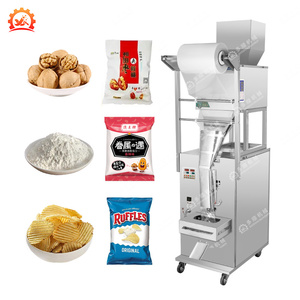
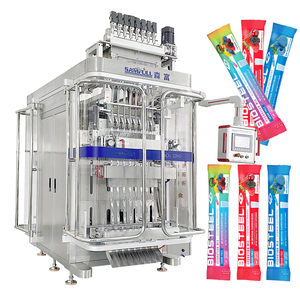

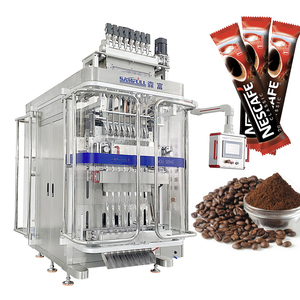
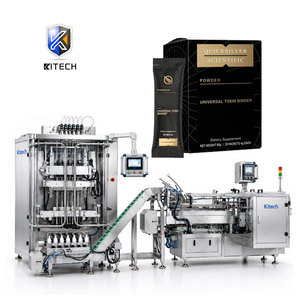
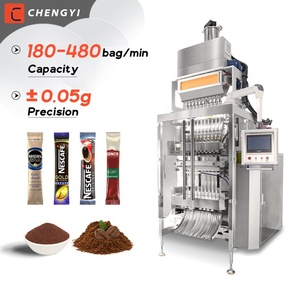
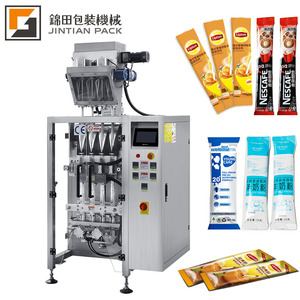
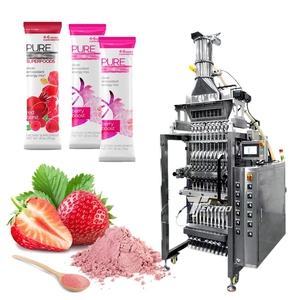
Exporting automated multi-lane powder packaging machinery to Canada demands rigorous adherence to regional regulatory frameworks and mechanical safety standards. Canadian food, beverage, and Natural Health Product (NHP) processing plants operate under the watchful oversight of the Canadian Food Inspection Agency (CFIA), Health Canada (under NHP Regulations - NHPR), and local safety standards governing electrical panels (such as CSA SPE-1000 or CAN/CSA-C22.2).
When Canadian copackers and brands upgrade from single-lane vertical form fill seal (VFFS) systems to high-speed multi-lane stick pack machines, machine architecture must be engineered to prevent cross-contamination, guarantee complete cleanability (CIP/WIP readiness), and uphold strict weight accuracy. For dietary supplements like whey protein isolate, collagen peptides, and hydration electrolyte mixes registered under a Natural Product Number (NPN), Health Canada enforces Good Manufacturing Practices (GMP) equivalent to pharmaceutical standards. Our multi-lane packaging machinery incorporates 316L stainless steel contact surfaces, Ra < 0.4 μm mirror-polished auger hoppers, and seamless continuous welds that withstand caustic sanitation cycles.
Technical Insight for Canadian Buyers: Electrical panels exported to provinces like Ontario, Quebec, British Columbia, and Alberta must feature ESA or CSA-recognized components (e.g., Schneider, Allen-Bradley, Siemens) to pass field evaluations (SPE-1000) effortlessly during commissioning, preventing costly project delays.
Powdered materials behave dramatically differently based on bulk density, particle size distribution, moisture sensitivity, and flowability index (Carr’s Index and Hausner Ratio). Fine hydrophobic powders (such as micronized instant coffee or botanical extract powders) require specialized de-aeration systems, whereas sticky or hygroscopic formulations (such as branch-chain amino acids (BCAAs) or milk powder blends) tend to bridge in conventional hoppers.
Our multi-lane powder stick pack machines resolve flow inconsistency through an independent servo-driven auger control matrix. Each lane features a dedicated servo motor that drives a micro-machined auger screw inside a sealed filling tube. This permits micro-adjustments to individual lanes down to 0.01g increments. Coupled with horizontal and vertical agitation paddles, the powder column maintains uniform bulk density prior to discharge into the formed film tube, guaranteeing precise dose delivery even across 4, 6, 8, or 10 parallel lanes at speeds exceeding 400 stick packs per minute.
| Performance Parameter | 4-Lane Multi-Stick System | 6-Lane Multi-Stick System | 8-Lane High-Speed System | 10-Lane Industrial Line |
|---|---|---|---|---|
| Maximum Output (Sticks/Min) | 160 - 200 bpm | 240 - 300 bpm | 320 - 400 bpm | 400 - 500 bpm |
| Dosing Range | 1g – 30g (Auger/Volumetric) | 1g – 20g (Auger Fill) | 1g – 15g (Micro-Auger) | 1g – 10g (Micro-Auger) |
| Packaging Film Width | Max 320 mm | Max 480 mm | Max 640 mm | Max 800 mm |
| Stick Pack Width Range | 17 mm - 40 mm | 17 mm - 35 mm | 17 mm - 30 mm | 17 mm - 25 mm |
| Air Consumption & Pressure | 0.6 MPa, 0.35 m³/min | 0.6 MPa, 0.45 m³/min | 0.6 MPa, 0.60 m³/min | 0.6 MPa, 0.80 m³/min |
| Nitrogen Flush Residual O² | < 1.0% | < 0.8% | < 0.5% | < 0.5% |
The Canadian market for on-the-go single-serve packaging has exploded, driven by changing consumer habits across major metropolitan hubs such as Toronto, Vancouver, Montreal, and Calgary. Key industry applications tailored to local processing conditions include:
Single-serve hydration powders, collagen sticks, and pre-workout formulas require airtight oxygen barrier seals. Integrated nitrogen flushing preserves active ingredient potency against oxidative degradation.
From micro-ground espresso stick packs to 3-in-1 coffee-dairy blends, our systems feature ultrasonic or continuous heat-sealing jaws designed for thick, multi-layer aluminum or eco-friendly paper laminates.
Sanitary micro-dosing for pediatric oral rehydration salts (ORS), laxative powders, and probiotic strains. Temperature-controlled cleanroom integration keeps humidity below 30% RH.
A. Shift Towards Sustainable Mono-Material Laminates: Canadian consumers and corporate ESG initiatives are demanding recyclable packaging solutions. Modern multi-lane stick pack equipment must process eco-friendly films like Mono-PE, Mono-PP, and paper-aluminum bio-composites without melting or tearing. Our machines utilize precision digital temperature controllers (PID) with independent jaw heat monitoring to seal sensitive bio-films flawlessly.
B. Bilingual Packaging Compliance & Serialization: Canada's federal bilingual labeling requirement (English and French) means stick packs and outer display cartons must accommodate larger surface artwork and regulatory barcode scanning. Our integrated laser coding and thermal transfer printing systems (TTO) allow high-definition printing of lot codes, expiry dates, NPN numbers, and bilingual text directly onto each stick pack in real time.
C. Fully Automated Downstream Cartoning: To offset rising labor costs in North America, leading Canadian contract manufacturers are pairing multi-lane stick pack equipment directly with automated horizontal or vertical cartoning machines. Our KL Series integrators automatically count, collate, and insert finished stick packs into counter display boxes at high speeds, minimizing human touchpoints.
As a trusted OEM manufacturer and global exporter, our state-of-the-art production facility builds equipment with component standardization from leading global suppliers, including Siemens PLC, Omron sensors, Schneider electrics, Festo pneumatics, and SMC cylinders. This guarantees that replacement parts and technical service are readily available locally across Canadian provinces.
Every exported system undergoes a rigorous 72-hour continuous dry-run test followed by live powder calibration using client-supplied product samples. We supply comprehensive FAT (Factory Acceptance Test) documentation, SAT (Site Acceptance Test) protocols, along with IQ/OQ/PQ validation templates suitable for pharmaceutical and NHP audit compliance in Canada.
Answers to critical questions regarding electrical safety certification, climate adaptation, dust containment, and shipping logistics to Canada.
All electrical cabinets destined for Canada are wired to North American standards (208V / 480V, 3-Phase, 60Hz) using cULus or CSA certified components. We offer pre-inspection option for SPE-1000 field evaluation prior to dispatch.
Our multi-lane packaging machines feature enclosed acrylic safety doors, sealed auger hoppers, and negative-pressure dust extraction manifolds connected directly to local exhaust ventilation (LEV) systems.
We support standard straight cuts, rounded safety corners, micro-perforations, tear notches, and custom laser scoring for easy opening by end-consumers.
Standard manufacturing takes 35 to 45 business days. Sea freight shipping to Vancouver (West Coast) takes ~18-22 days, while Montreal/Toronto (East Coast) via rail/sea takes ~28-35 days.