
Explore expert articles, machinery updates, technical guides, and industry insights from ReformMak.
Engineered with precision servo drives, automatic pinhole inspection, and modular tooling for solid dosage, liquid, capsule, and medical device packaging.
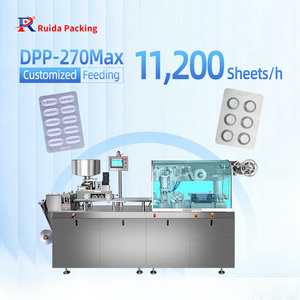
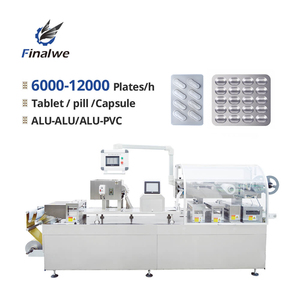
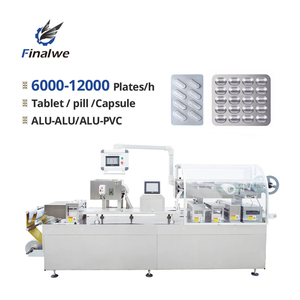
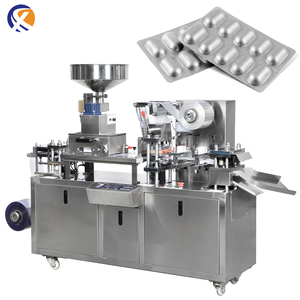
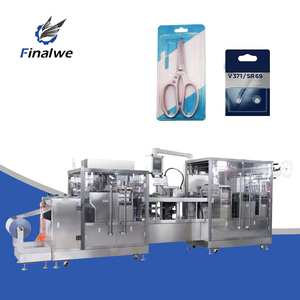
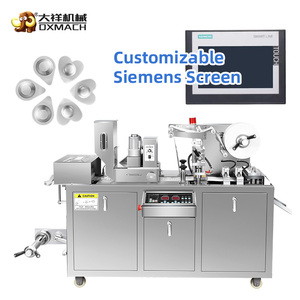
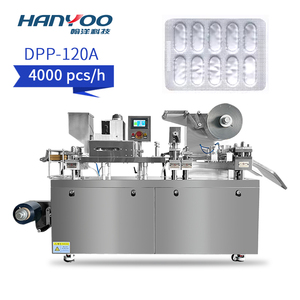
Blister packaging serves as the primary barrier preventing Active Pharmaceutical Ingredient (API) degradation caused by ambient moisture, oxygen, ultraviolet radiation, and mechanical shock. In New Zealand's maritime climate, characterized by localized relative humidity fluctuations, selecting the appropriate forming technology is paramount to guaranteeing a 24-to-36-month shelf life.
Thermoforming (PVC/PVDC/PET): Utilizes precise radiant heating zones (typically 120°C to 150°C) to soften thermoplastic polymers before positive air pressure or mechanical plug-assist molds shape the blister pockets. Modern DPP series machines integrate pneumatic-plug assistance to ensure uniform wall thickness down to 45 microns across deep pocket geometries, eliminating micro-thin spots that could compromise moisture vapor transmission rates (MVTR).
Cold Forming (Alu-Alu): Employs multi-layer laminated aluminum foil (OPA/Alu/PVC) cold-stamped via solid tungsten-carbide punches. Because aluminum exhibits zero elasticity compared to polymers, cold-forming machinery must exert higher mechanical tonnage with micron-accurate stroke control to prevent foil delamination or pinhole fractures. Our DPP-250 and DPP-120A series feature servo-controlled indexing mechanisms that maintain equalized stamping distribution, providing an absolute barrier (zero MVTR and zero oxygen permeability) essential for highly hygroscopic compounds and delicate probiotic formulations.
The integrity of a blister package relies entirely on the hermetic seal formed between the pocketed base web and the heat-sealable lidding foil (hard-tempered aluminum coated with heat-seal lacquer). Microscopic channels or micro-leaks within the heat seal lead to batch rejection during vacuum decay testing.
Our CE-certified blister machinery addresses heat sealing through two distinct mechanical architectures:
To meet cGMP Annex 11 and US FDA 21 CFR Part 11 requirements enforced during Medsafe audits, automated inline quality control modules are fully integrated into our control platforms. High-resolution CCD camera vision systems perform 100% surface inspection at speeds up to 300 strokes per minute, verifying:
Non-compliant blister cards are logged by the central Siemens S7-1500 PLC and automatically ejected via a high-speed pneumatic pusher into a locked reject bin, guaranteeing zero defective blisters enter downstream cartooning stages.
New Zealand’s bio-pharmaceutical landscape is uniquely dominated by premium natural health products, including high-potency green-lipped mussel extracts, deer velvet, manuka honey softgels, bovine colostrum powders, and specialized probiotic strains. These high-value bio-actives are notoriously sensitive to oxidation and moisture degradation.
Our DPP-115 and DPP-250 custom blister machines are equipped with specialized peristaltic liquid pumps and nitrogen-flushing purge chambers, enabling New Zealand contract manufacturers in regions such as Auckland, Waikato, and Canterbury to package liquid honey, oils, and delicate powders into single-serve thermoformed unit-dose blisters with zero oxygen headspace.
With New Zealand’s national commitment to environmental sustainability under the Waste Minimisation Act and corporate ESG mandates, pharmaceutical suppliers are transitioning away from traditional PVC/PVDC webs toward recyclable monomaterials such as PP (Polypropylene), PET, and PE-laminated films.
Traditional blister sealing equipment often struggles with recyclable monomaterials due to their narrow thermal processing windows. Our upgraded heating control systems feature PID multi-zone digital temperature modules accurate to ±0.5°C, enabling seamless processing of recyclable plastic blister trays and plastic-free paper-backed blister cards without film warping or seal failure.
New Zealand pharmaceutical suppliers frequently utilize the Trans-Tasman Mutual Recognition Arrangement (TTMRA) to supply finished pharmaceuticals and health supplements directly into Australia. Consequently, manufacturing equipment installed in New Zealand must comply with Australia's TGA Good Manufacturing Practice standards. Our CE-certified machines feature full 316L stainless steel contact parts, toolless quick-dismantling feeders, and complete DQ/IQ/OQ/PQ validation documentation packages, ensuring seamless audit sign-offs for export-oriented facilities.
Review the technical parameters to align machinery selection with your production capacity and dosage form requirements:
| Model Series | Forming Type | Max Capacity | Suitable Materials | Recommended Application | Cleanroom Footprint |
|---|---|---|---|---|---|
| DPP-88 / DPP-120A | Flat Plate Pneumatic | 1,200 – 4,800 plates/h | PVC, ALU-ALU, PET | R&D Labs, Clinical Trials, Small Batch Supplements | Compact (< 2.5 m²) |
| DPP-115 Custom | Flat Plate + Liquid Pump | 3,600 – 7,200 plates/h | PVC/ALU, Barrier Foils | Nutraceutical Liquids, Manuka Honey, Unit-Dose Pastes | Medium (~ 3.2 m²) |
| DPP-250 High Output | Flat Plate Servo Drive | 12,000 – 18,000 plates/h | ALU-ALU, PVC/PVDC, PP | Commercial Pharma, High-Moisture Sensitive Tablets | Standard Cleanroom (~ 4.8 m²) |
| DPH-260 Rotary | Rotary Drum Continuous | Up to 27,000 plates/h | PVC/ALU High Speed | Mass Commercial Production, High-Volume Contract Packaging | Industrial Production (~ 5.5 m²) |
Combining 20+ years of precision mechanical engineering with ISO 9001:2015 quality standards and dedicated international field service support.
Every blister machine is manufactured under strict ISO 9001:2015 quality management systems, fully compliant with European Union CE Safety Directives (2006/42/EC Machine Directive & Low Voltage Directive).
We provide comprehensive DQ, IQ, OQ, and PQ validation protocols, material traceability certificates (316L/304 SS & FDA polymer contact parts), and circuit schematics tailored for Medsafe auditor review.
3D CAD customized pocket dies manufactured on CNC machining centers allow precision fitting of unique tablet shapes, dual-color capsules, or medical devices with toolless 15-minute quick-change mechanisms.
Integrated Siemens human-machine interface (HMI) touchscreens feature multi-level user password security, audit trail logging, recipe management, and Ethernet remote telemetry support.
With thousands of active installations worldwide, our engineering team possesses deep international logistical experience shipping to major ports including Auckland, Tauranga, and Lyttelton.
Dedicated after-sales support offering video commissioning assistance, emergency global spare parts dispatch, and remote diagnostic system connectivity 24 hours a day, 7 days a week.
Contact our senior pharmaceutical engineering consultants to discuss your specific dosage form, capacity targets, or custom blister layout for the New Zealand market. Receive an itemized technical proposal and factory-direct quote within 24 hours.