Explore expert articles, machinery updates, technical guides, and industry insights from ReformMak.
Top Trusted Viscous Liquid Filling Packaging Machine Supplier & Exporters
Global Engineering Whitepaper: High-Viscosity Rheology Dosing, Multi-Lane Stickpack Systems & Next-Gen Smart Factory Automation Standards
Industrial Machine Product Range
High-precision vertical form-fill-seal (VFFS), multi-lane stickpack, and automatic dosing solutions engineered for demanding production environments worldwide.
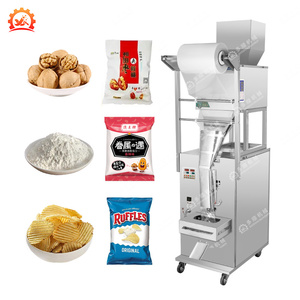
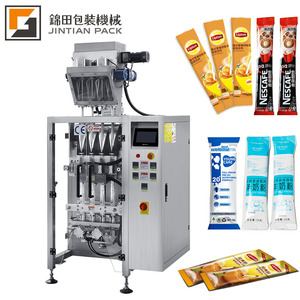
DZD-420B Accurate Low Price Back and 4 Side Universal Granule Sachet Stick Salt Packaging Sugar Packing Machine
Engineered with high-speed pneumatic sealers, customizable volumetric feeding mechanisms, and dual-servo film pulling for precise stick and 4-side sachet formation.
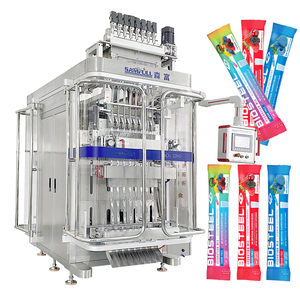
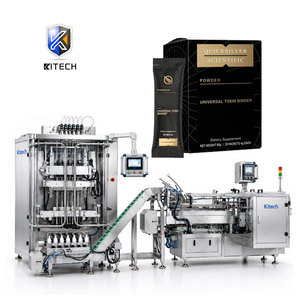
Automatic Multi Lane 10g 12g Dietary Protein Supplement Drink Electrolyte Powder Stick Packing Machine
Specialized internal auger dosage tracks designed for fine protein and dietary supplements, eliminating dust buildup and ensuring 99.5% weight precision.
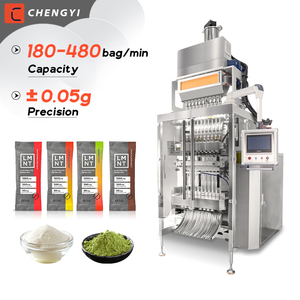
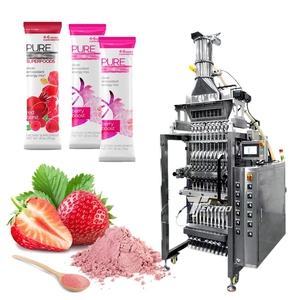
Ultra-fast micro-dosing VFFS solution delivering low-grammage sachet packaging with airtight hermetic seals for global pharmaceutical and food sectors.
1. The Science of Viscous Liquid & High-Density Packaging Engineering
Packaging non-Newtonian liquids, high-viscosity pastes, heavy syrups, gels, creams, and particulate slurries presents intricate mechanical and fluid dynamics challenges. Unlike free-flowing aqueous liquids, viscous media exhibit complex shear-thinning (thixotropic) or shear-thickening dynamics, non-linear flow rates, and high surface tension. Achieving continuous milligram-level dosing accuracy requires a profound mastery of fluid rheology, mechanical design, and thermal fluid controls.
As a world-class Viscous Liquid Filling Packaging Machine Supplier & Exporters, our equipment is built around advanced positive displacement technology. Whether handling honey (10,000 cPs), industrial greases (100,000+ cPs), pharmaceutical ointments, or cosmetic pastes, our machines overcome fluid resistance, eliminate tailing or stringing at the sealing jaws, and prevent air entrapment during high-speed volumetric cycles.
Servo Rotary Lobe & Piston Dosing
Precision-machined rotary lobe pumps and rotary piston cylinders driven by independent servo motors allow micro-adjustment of displacement profiles to accommodate thermal expansion and fluid shear variations.
Ultrasonic & Heated Cut-Off Nozzles
Anti-drip, positive-closure nozzle assemblies integrated with ultrasonic suck-back valves ensure immaculate, zero-residue pouch sealing faces, eliminating seal degradation caused by liquid contamination.
Thermal Jacket & Agitation Systems
Dual-wall insulated hoppers equipped with internal hot water circulation and motorized variable-speed anchor agitators maintain optimal product temperature and viscosity consistency across 24/7 runs.
2. Product & Technology Development Trends (2025–2030)
The international packaging machinery ecosystem is undergoing a dramatic structural transformation driven by industry 4.0 digitization, strict ESG environmental regulations, and demanding consumer preference for single-serve stickpacks and flexible sachets. Below are five pivotal technological shifts shaping the next decade of high-viscosity liquid packaging equipment design:
Industrial IoT & AI Real-Time Viscosity Compensation
Next-generation packaging machinery incorporates inline viscometers and micro-mass flow sensors. When temperature shifts alter product viscosity mid-shift, the PLC algorithm automatically recalibrates pump displacement timing without operator intervention.
Monomaterial & Recyclable Film Processing
Transitioning from traditional multi-layer aluminum foils to 100% recyclable mono-PE or mono-PP flexible films requires ultra-precise seal jaw temperature control ±1°C and continuous web tension management to prevent film stretch.
Automated CIP/SIP Hygienic Integration
Pharmaceutical and food safety guidelines demand rapid product changeovers without manual teardown. Self-draining line designs combined with automated Clean-in-Place (CIP) and Sterilize-in-Place (SIP) washdown circuits reduce downtime by 65%.
Global OEM buyers, contract packagers, and enterprise pharmaceutical directors must evaluate filling technologies based on total cost of ownership (TCO), overall equipment effectiveness (OEE), maintenance intervals, and yield efficiency. The technical evaluation table below provides a comprehensive comparison of dominant dosing methodologies for viscous fluids:
Dosing System Type
Optimal Viscosity Range
Dosing Accuracy
Cleaning & Changeover Time
Primary Industry Applications
Pneumatic Piston Pump
1,000 – 50,000 cPs
± 0.5% – 1.0%
45 – 60 Mins (Manual Disassembly)
Standard Sauces, Ketchup, Jams, Shampoos
Servo Rotary Lobe Pump
5,000 – 200,000 cPs
± 0.2% – 0.5%
15 – 25 Mins (CIP Compatible)
High-Density Pastes, Peanut Butter, Resins
Peristaltic Dosing System
1 – 10,000 cPs
± 0.5%
< 5 Mins (Single-Use Tubing)
Sterile Pharma, Biologics, Reagents
Servo Volumetric Auger / Metering
Dry Powders & Slurries
± 0.3% – 0.8%
20 – 30 Mins
Nutraceutical Powders, Hydration Mixes
Why Enterprise Global Buyers Partner With Us
With over two decades of dedicated R&D in automated vertical form-fill-seal (VFFS) systems, multi-lane stickpack solutions, and high-viscosity dosing lines, our enterprise engineering hub delivers robust manufacturing hardware backed by unmatched global technical support.
Global Export Infrastructure delivering installed units across 60+ countries on 5 continents.
Siemens / Omron / Schneider PLC motion control architectures for high stability and easy global sourcing.
Complete FAT & SAT Protocol including 3Q validation (IQ/OQ/PQ) for pharmaceutical applications.
4. Frequently Asked Questions (FAQ) for Machine Procurement
Technical responses engineered for procurement officers, process engineers, and plant managers.
How do your machines prevent dripping, stringing, and seal jaw contamination during high-viscosity liquid filling?
Our high-viscosity liquid filling machines incorporate custom pneumatic positive-closure shut-off nozzles coupled with an automated pneumatic suck-back vacuum valve. Right after the dosing pump completes its stroke, the valve creates a negative micro-pressure that pulls trailing liquid droplets back into the nozzle orifice. Furthermore, heated cut-off tips maintain fluid fluidity, preventing stringing and guaranteeing that film seal faces remain completely sterile and contaminant-free for 100% hermetic seal integrity.
Can a multi-lane stickpack machine handle both viscous liquids (like honey) and dry powders on the same chassis?
Yes. Our modular multi-lane vertical packaging platforms feature quick-interchangeable dosing heads. By unbolting the multi-lane liquid piston pump array and replacing it with a multi-lane volumetric auger or cup filler, operators can switch production from high-viscosity gels or liquids to free-flowing or non-free-flowing powders within 45 to 60 minutes. The base VFFS machine frame, servo film-pulling mechanism, and sealing jaws remain fully compatible across both dosing modes.
What construction materials and hygienic standards are adhered to for food and pharmaceutical applications?
All product contact parts (dosing pumps, hoppers, tubing, nozzles) are standard-fabricated from food- and pharma-grade AISI 316L stainless steel, complete with sanitary tri-clamp fittings and Teflon/Viton seal gaskets. External frame structures are built from heavy-gauge AISI 304 stainless steel. Upon request, we provide full electro-polishing down to Ra < 0.4 µm, compliance documentation for FDA 21 CFR Part 11, and complete cGMP-compliant 3Q certification packages (IQ/OQ/PQ).
What is the expected production linear speed and output capacity for multi-lane stickpack machines?
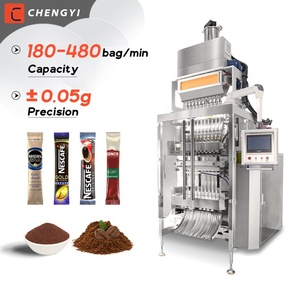
Production output depends on lane count, liquid viscosity, and fill volume. For example, an 8-lane stickpack machine filling 10g liquid sachets operates at 35–50 cycles per minute, translating to an output of 280 to 400 finished stickpacks per minute (16,800 to 24,000 units/hour). For higher viscosity pastes (over 50,000 cPs), speed is optimized via heated hoppers to achieve max operational throughput without sacrificing target weight accuracy.
How do you handle global after-sales commissioning, FAT/SAT testing, and spare parts delivery?
Before dispatch, every equipment unit undergoes a comprehensive Factory Acceptance Test (FAT) utilizing customer product samples and packaging films. Upon international delivery, our field application engineers execute Site Acceptance Testing (SAT), line integration, and operator training on-site. Furthermore, all main automation components (PLC, touchscreens, servos, pneumatics) utilize standard global brands (Siemens, Omron, Schneider, Festo) ensuring rapid local replacement worldwide, backed by our 24/7 remote IoT diagnostic portal.
What lead time is required for standard vs fully custom-engineered liquid packaging lines?
Standard single-lane VFFS or 2-lane stickpack machines carry a standard manufacturing lead time of 30 to 45 calendar days. Complex, high-speed multi-lane lines (6 to 10 lanes) integrated with automatic downstream cartoning systems, thermal transfer printers, and online checkweighers typically require 60 to 75 days, inclusive of design approval, custom machining, electrical wiring, and stringent FAT testing cycles.
Ready to Elevate Your Packaging Efficiency?
Consult directly with our senior application engineers to obtain custom line layouts, ROI analysis, and tailored equipment quotes.