
Explore expert articles, machinery updates, technical guides, and industry insights from ReformMak.
Explore our state-of-the-art automated packaging machinery designed for high-viscosity liquids, eco-spoon thermoforming, and high-speed stick pouch dosing.
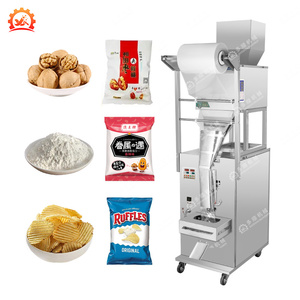
High-precision servo-driven multi-purpose packaging platform for viscous liquids and granular supplements with 4-side seal integrity.
Get Catalog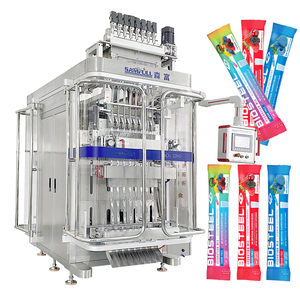
High-output 8-lane VFFS machine optimized for high-speed liquid honey stick dosing and electrolyte syrup stick packaging.
Get Catalog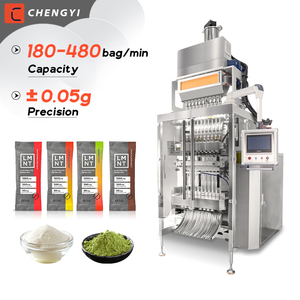
Designed for precise 10g–12g dosage single-serve formats. Features anti-drip peristaltic pump nozzles for pure honey & gel packaging.
Get Catalog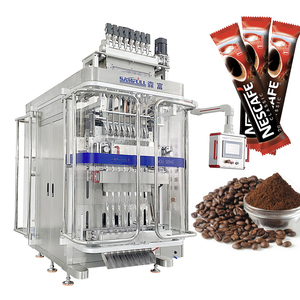
Dual-lane high-performance thermoforming and stick packing unit ideal for specialty honey spoons and liquid coffee syrups.
Get Catalog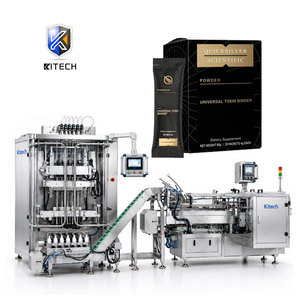
Turnkey 6/8-lane packaging line linked directly with automated cartoning systems for honey spoons and retail unit boxing.
Get Catalog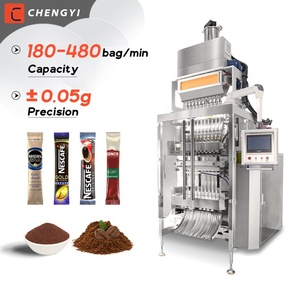
Ultra-precise 3g, 5g, to 7g dosing for single-serve honey spoons, honey sticks, and concentrated nutraceutical liquid gels.
Get Catalog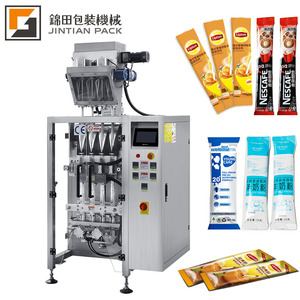
CE-certified 2-lane vertical liquid filler with double jacket thermal control for consistent honey viscosity and vacuum seal lock.
Get Catalog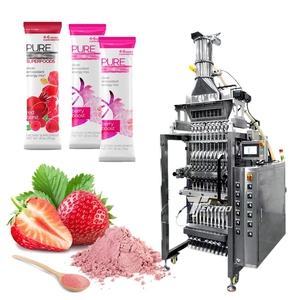
4-Line heavy-duty liquid packaging system engineered for honey spoon thermoforming, liquid immunity shots, and gel sachets.
Get CatalogThe global honey packaging sector is experiencing a paradigm shift driven by evolving consumer habits, single-serve convenience trends, and heightened hygiene standards. Honey spoon packaging—a revolutionary unit-dose design featuring thermoformed plastic or biodegradable spoons sealed with peelable aluminum barrier foil—has rapidly emerged as a premium alternative to traditional glass jars and plastic squeeze bottles. For commercial honey packers, pharmaceutical co-packers, and FMCG brands, selecting a Top Trusted Honey Spoon Packaging Machine Factory & Supplier is a strategic decision that directly impacts operational throughput, filling accuracy, shelf-life integrity, and brand positioning.
This whitepaper provides an exhaustive technical analysis of honey spoon thermoforming-filling-sealing machinery, detailing fluid dynamics, viscosity thermal management, seal integrity parameters, and market forecast trends for procurement executives and plant managers worldwide.
Utilizes multi-zone heating and deep-draw pneumatic forming to shape rigid PVC/PET films into ergonomic, food-grade honey spoons at high speed.
Engineered with servo-controlled rotary piston pumps and suck-back nozzles to prevent tailing, stringing, and seal area contamination during high-viscosity filling.
Dual-stage thermal seal heads apply controlled pressure and temperature to bond peelable foil, preserving volatile aroma compounds and extending shelf life.
Honey is a non-Newtonian, thixotropic fluid with a dynamic viscosity ranging between 2,000 and 10,000 mPa·s (cps) depending on temperature, botanical origin (e.g., Manuka, Acacia, Wildflower), and moisture content. Machinery designed for automated honey spoon packaging must overcome three core physical challenges: heat-induced caramelization risks, capillary dripping during high-speed indexing, and structural stress during peelable lid separation.
The process begins with roll-fed rigid thermoplastic film (typically PS, PET/PE, or compostable PLA sheets ranging from 300μm to 600μm thickness). The film passes through an infrared pre-heating station divided into independently controlled heating zones. Once optimal glass transition temperature ($T_g$) is reached, positive air pressure combined with mechanical plug assistance forces the material into custom-machined CNC aluminum mold cavities. This guarantees consistent wall thickness across the spoon bowl, stem, and perimeter sealing flange.
To maintain fluid flow without degrading delicate enzymes (such as invertase and glucose oxidase) or raising Hydroxymethylfurfural (HMF) levels, the machine's hopper and volumetric rotary pumps are enclosed in a closed-loop hot water jacket maintained at a precise temperature of $38^\circ\text{C}$ to $42^\circ\text{C}$. Servo-driven pistons dispense volume doses ranging from 7g to 15g with a repeatable tolerance of $\le \pm 0.05\text{g}$.
Honey stringing is the leading cause of compromised seals. Our machines incorporate pneumatic suck-back nozzles paired with high-speed cut-off valves. At the microsecond of dose completion, the piston executes a reverse micro-stroke, creating a vacuum that retracts trailing liquid back into the nozzle orifice, leaving the sealing flange completely free of residue.
| Performance Metric | Honey Spoon Packaging | Standard Liquid Sachet | Traditional Glass Bottle |
|---|---|---|---|
| Consumer Convenience | Exceptional (No utensil required, clean tear) | Moderate (Requires tearing, prone to spill) | Low (Heavy, requires spoon) |
| Dosing Accuracy | ±0.05g (Servo Piston) | ±0.2g (Volumetric) | Manual / Variable |
| Oxygen Barrier Integrity | High (Alu-Foil Lamination) | Medium to High | Maximum |
| Production Speed Range | 120 – 360 spoons/min | 160 – 480 sachets/min | 60 – 150 bottles/min |
| Freight & Shipping Efficiency | High (Lightweight, stackable) | Maximum | Low (Heavy tare weight, breakable) |
As global buyers evaluate manufacturing partners for long-term production scaling, several macro trends are reshaping the machinery specification requirements:
As an ISO 9001:2015 certified manufacturer with over two decades of mechanical innovation, our enterprise stands as a beacon of reliability and technical authority in the international packaging machinery domain. We operate a state-of-the-art 15,000 m² production center equipped with 5-axis CNC machining centers, laser cutting systems, and cleanroom assembly zones.
Every honey spoon packaging machine undergoes strict Quality Assurance (QA) protocols, including a continuous 72-hour dry-cycle run and a 24-hour live product viscosity test prior to dispatch. All contact materials are constructed from certified AISI 316L stainless steel and FDA-approved food-grade polymers, fully compliant with CE, GMP, and EHEDG sanitary standards.
Our systems feature constant thermal recirculation loops within the double-jacketed hopper and delivery lines. Combined with slow-speed mechanical agitation, this prevents sugar crystallization and maintains uniform viscosity throughout multi-shift operations.
The forming station is compatible with PVC, PET, PS, and PP multi-layer laminates. For top lamination, peelable aluminum foil, PET/AL/PE, or high-barrier eco-paper foils with heat-seal lacquer are fully supported.
Yes. Our machines are built with modular quick-change tooling. Form dies and sealing heads can be swapped within 45 to 60 minutes, allowing operators to switch between 7g mini-spoons, 10g standard spoons, and 15g therapeutic doses effortlessly.
Based on operational data from our global clients in Turkey, Europe, and Southeast Asia, automated spoon lines yield a complete ROI within 8 to 14 months through reduced labor overhead, elimination of product giveaway, and premium retail price margins for unit-dose honey.
We provide full installation commissioning, operator training, lifetime remote PLC technical assistance, and guaranteed dispatch of critical wear-and-tear spare parts within 24 to 48 hours worldwide.
Contact our senior engineering team to request detailed machine specifications, custom layout design, and competitive factory-direct pricing for your project.
Get Catalog