
Explore expert articles, machinery updates, technical guides, and industry insights from ReformMak.
Engineered for High Density, Fine Flowability, and Zero-Dust Sealing Accuracy
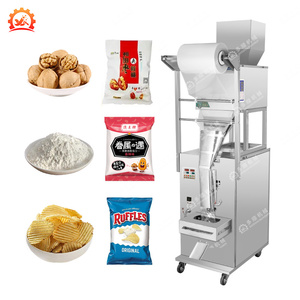
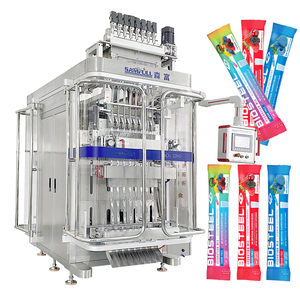


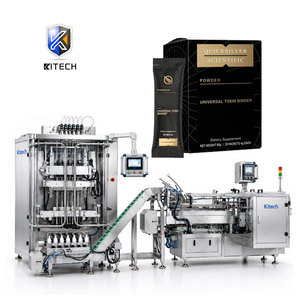
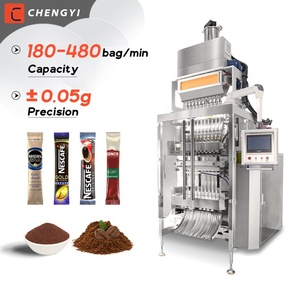
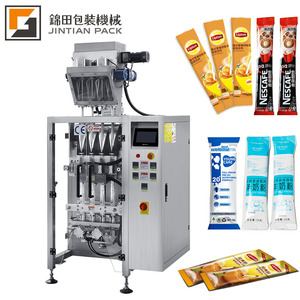
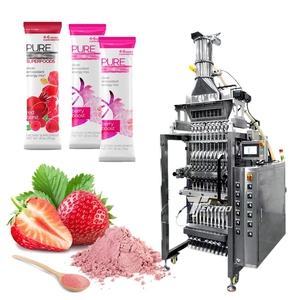
The manufacturing and automated packaging of synthetic detergent powders present unique mechanical and chemical challenges. Unlike inert dry powders like sugar or flour, laundry detergent formulations consist of complex, multi-component chemical matrices including anionic and non-ionic surfactants, builder zeolites, sodium carbonate, bleaching agents (such as sodium percarbonate), and heat-sensitive active enzymes. As an OEM/ODM industry specialist with over two decades of machine design authority, our engineering framework focuses on solving four critical operational bottlenecks: powder bulk density variability, fine surfactant dust control, seal-area contamination, and chemical abrasion.
Modern washing powders exhibit high hygroscopic tendencies and varying bulk densities (ranging from 300 g/L for light spray-dried powders to over 800 g/L for concentrated extruded granules). Our custom OEM packaging equipment utilizes independently controlled servo auger drives for each packaging lane. By decoupling the agitator drive from the main metering screw, the internal hopper agitator maintains continuous, uniform powder agitation without shearing delicate detergent granules or creating excessive fines.
Floating surfactant dust particles pose the single greatest threat to heat-seal integrity in flexible pouches. When airborne detergent settles on the inner PE sealant layer of film prior to jaw closure, standard thermal heat jaws produce microscopic channels, resulting in atmospheric moisture ingress, product caking, and pouch failure during shipment.
To counteract this, our OEM packaging lines incorporate closed-loop pneumatic dust extraction shrouds at the filling nozzle interface, combined with optional Ultrasonic Sealing Technology. Ultrasonic vibrations displace dust particulates from the sealing zone prior to thermal bonding, guaranteeing zero-leakage seals even at packaging speeds exceeding 100 cycles per minute per lane.
| Packaging Architecture | Typical Dose Range | Production Speed (Lanes/Min) | Seal Mechanism | Primary Detergent Application |
|---|---|---|---|---|
| Single-Lane VFFS Pillow Pouch | 250g – 5000g | 40 – 80 bags/min | Constant Heat / Servo Hydraulic | Retail Bulk Washing Powder Bags |
| Multi-Lane Stick Pack System | 5g – 50g | 350 – 1200 sticks/min | Rotary / Pneumatic Heat Jaw | Unit-Dose Travel Packs & Concentrates |
| Rotary Premade Pouch Machine | 500g – 10kg | 30 – 60 pouches/min | Dual-Stage Impulse Sealing | Stand-up Zipper Pouches (Doypack) |
| Multi-Track Sachet Machine | 10g – 100g | 200 – 800 sachets/min | 4-Side / 3-Side Thermal Seal | Single-Use Promotional & Refill Packs |
Strategic Sourcing Insights for Procurement Directors & Automation Engineers
Global FMCG markets are rapidly shifting from heavy 5kg powder boxes toward compact unit-dose stickpacks and mini sachets (10g–30g). This reduces shipping carbon footprints by up to 40% while catering to single-wash consumer habits. Equipment must feature ultra-precise micro-augers.
Environmental mandates require transitioning from traditional PET/ALU/PE laminates to 100% recyclable Polyethylene (BOPE/PE) structures. Our machines integrate precise multi-zone PID thermal controls to prevent film burn-through on delicate mono-PE substrates.
Modern production facilities require Industry 4.0 architecture. Next-gen packaging machines come fitted with OPC-UA communication protocols, monitoring real-time OEE, motor vibration, thermal fluctuation, and auger wear to eliminate unplanned operational downtime.
When procuring custom OEM detergent packaging machinery, procurement managers must evaluate total cost of ownership (TCO) rather than upfront capital expenditure alone. Key purchasing vectors include operational machine longevity, ease of sanitization, spare parts availability, and changeover flexibility.
World-Class OEM/ODM Engineering Capabilities for Industrial Enterprise Buyers
Specialized expertise in chemical granule & powder handling technology with over 500+ successful global installations across 60+ countries.
Rigorous quality control management complying with European Union CE safety directives and international ISO 9001:2015 manufacturing standards.
Tailor-made machine configurations matching exact factory layouts, target pouch dimensions, dosing tolerances, and speed specifications.
24/7 remote diagnostic assistance paired with global on-site commissioning, technician training, and rapid spare parts dispatch within 48 hours.
Our OEM packaging systems incorporate dynamic density compensation algorithms via integrated checkweighers. If the detergent bulk density varies due to raw material batch changes, the downstream checkweigher feeds real-time weight feedback to the servo auger controller, automatically adjusting the revolution count of the metering screw to maintain target weight within ±0.3% to ±0.5% accuracy.
Detergent powders often contain aggressive salts and optical brighteners. All parts in direct contact with the product are fabricated from high-grade AISI 316L stainless steel. Structural panels are treated with anti-corrosive powder coatings, and all pneumatic actuators utilize chemical-resistant Viton seals to extend operational lifespan.
Yes. Our latest generation multi-lane stick pack and sachet machines are retrofitted with custom temperature response curves and low-friction servo film transport belts. This enables seamless processing of recyclable Mono-PE, BOPP, and biodegradable PLA films without stretching, melting, or compromising seam strength.
Standard model packaging machines are typically delivered within 30 to 45 days. For fully customized OEM turnkey lines—including custom auger dosing systems, dust collection manifolds, and integrated cartoning equipment—manufacturing, assembly, and FAT (Factory Acceptance Testing) take between 60 to 75 days.
We deploy a multi-stage dust control architecture. First, filling nozzles feature vacuum-assisted cutoff valves that eliminate stringing or trailing dust. Second, positive-pressure dust extraction hoods enclose the filling station, evacuating floating particles into a central dust collector before pouches transition to the heat-sealing station.