
Explore expert articles, machinery updates, technical guides, and industry insights from ReformMak.
Engineered for ultra-precise dosing, hermetic seal integrity, and high OEE in pharmaceutical, food, chemical, and nutraceutical packaging environments.
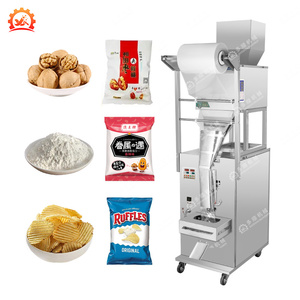
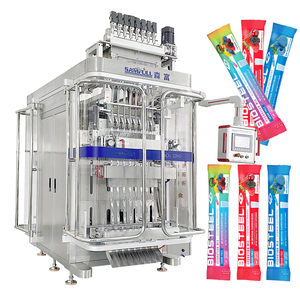

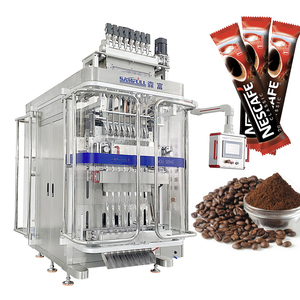
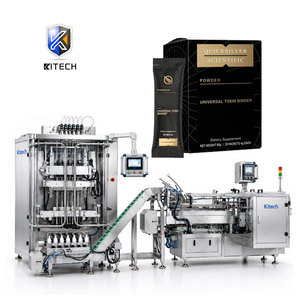
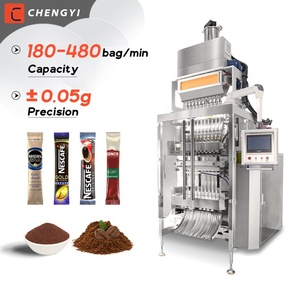
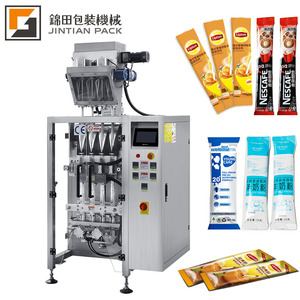
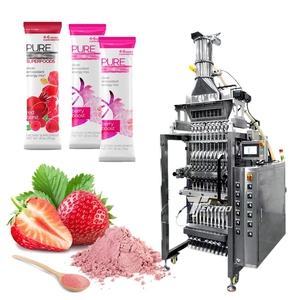
The global demand for single-serve, highly hygienic, and ultra-portable packaging solutions has driven unprecedented technological evolution across the flexible packaging sector. Among various pouch geometries, the four-side seal sachet remains the gold standard for high-value pharmaceuticals, active nutraceuticals, instant beverages, and specialty chemicals. Evaluating top China four-side seal sachet machine manufacturers requires looking beyond basic mechanical speeds to analyze structural frame rigidity, thermal sealing dynamics, servo-motion integration, and sustainable film handling capabilities.
Modern production facilities are transitioning away from single-lane vertical form-fill-seal (VFFS) systems toward multi-lane configurations ranging from 4 to 16 parallel lanes. This transition delivers immense economies of scale. A single 10-lane four-side seal sachet machine operating at 45 cycles per minute yields an aggregate output of 450 finished sachets per minute, reducing footprint requirements by over 60% compared to equivalent single-lane batteries while drastically lowering per-unit power consumption.
Global environmental regulations, including the European Union's Packaging and Packaging Waste Regulation (PPWR), are accelerating the phasing out of traditional multi-layer aluminum-foil laminates (such as PET/AL/PE) in favor of recyclable mono-material films (such as MDO-PE/PE or PP/PP barrier structures). Leading Chinese manufacturers are engineering advanced thermal control loops featuring real-time PID tuning and pneumatic pressure compensation to seal narrow-window mono-materials cleanly without melting or causing seam distortion.
| Evaluation Parameter | Traditional 3-Side Seal / Stick Pack | Advanced 4-Side Seal Sachet Line | Industrial Strategic Value |
|---|---|---|---|
| Hermetic Seal Integrity | Moderate seam stress along fold edges | Maximum perimeter clamping with 4 independent heat jaws | Prevents oxidation & moisture ingress for hygroscopic powders. |
| Branding & Print Real Estate | Restricted lateral face geometry | Dual flat front/back faces with 100% graphics alignment | Elevates consumer perception & regulatory barcode compliance. |
| Substrate Compatibility | Standard laminated structures | Recyclable mono-PE, PCR, paper-laminates & foil structures | Meets 2025-2030 international ESG sustainability mandates. |
| Dosing Precision Range | Typically ±1.5% to ±2% | Servo-driven individual auger micro-adjust (≤ ±0.5%) | Minimizes expensive product giveaway in pharmaceutical/nutra lines. |
Independent servo-driven augers or liquid piston pumps dedicated to each lane enable micro-gram volume adjustments directly via the HMI without stopping the production line.
Integrated top-head vacuum purging manifolds pull active airborne dust particles away from sealing zones during filling, guaranteeing zero seal contamination.
Multi-zone internal heating cartridges embedded with platinum sensor loops ensure precise uniform temperature dispersion across all sealing bars within ±1°C.
When procuring from China's leading machine builders, global buyers must assess the quality of underlying components. Top tier OEMs utilize international industrial hardware standardizations—such as Siemens S7-1500 Motion Controllers, Omron Photoelectric Registration Sensors, Schneider Electric Low-Voltage Components, and SMC Pneumatics—ensuring that localized spare parts sourcing and global field service remain seamless across North America, Europe, Southeast Asia, and the Middle East.
Building high-performance automated packaging machinery requires a strict quality assurance matrix, robust engineering capability, and responsive lifetime support. Our manufacturing ecosystem reflects world-class engineering standards designed specifically for high-capacity industrial buyers.
Every machine frame undergo stress-relief machining and dynamic balancing. Complete electrical layouts adhere to Low Voltage Directive (LVD) 2014/35/EU and Electromagnetic Compatibility (EMC) Directive 2014/30/EU standards, sporting full CE documentation for global customs clearance.
Beyond primary sachet forming, our engineering capability spans automated sachet alignment, checkweighing, robotic robotic pick-and-place collating, cartoning, and end-of-line case packing—delivering fully automated production lines managed by a unified PLC core.
Addressing the technical, operational, and commercial questions critical for enterprise procurement managers, packaging engineers, and plant managers.
A 4-side seal sachet is formed using two webs of film (or one web slit into two) sealed along all four perimeter borders (top, bottom, left, right), yielding a completely flat, rectangular pouch with maximum seal integrity and double-sided graphic real estate. In contrast, a stick pack uses a single film web folded longitudinally with one fin/lap back seal and two cross-seals. 4-side seal sachets provide superior barrier integrity for moisture-sensitive products like electrolyte powders and oral liquids.
Dosing accuracy across high-lane-count machines is achieved by deploying individual servo motors for each lane's auger shaft (or liquid piston). Instead of driving all augers off a single motor gearbox, independent servo motion allows fine tuning of rotational degrees per lane. Coupled with precision-machined 316L stainless steel dosing screws and real-time feedback from downstream checkweighers, volume variation is held within ≤ ±0.5% to ±1% depending on powder bulk density stability.
While the main vertical frame, film unwinding, tensioning, optical registration, and sealing jaw assemblies can be shared, the dosing head must be modular. To convert from powder to liquid (such as honey, ketchup, or shampoo), the overhead servo auger filling assembly is swapped out for a pneumatic valve liquid piston pump system or peristaltic dosing system. Quick-disconnect mechanical mounts and pre-configured HMI recipe settings make system conversion seamless.
Our global support protocol includes Factory Acceptance Testing (FAT) with live video streaming, followed by on-site installation, commissioning, and operator training by senior field service engineers. Furthermore, all equipment PLC panels feature secure IoT gateway modules, allowing our software team to conduct real-time remote diagnostics, firmware updates, and troubleshooting anywhere in the world 24 hours a day, 7 days a week.
Consult with our senior machinery application engineers today for tailored equipment sizing, custom film compatibility testing, CAD floor plan drawings, and factory-direct pricing quotes.