China Automatic Strip Packaging Machines: Technical Benchmark & Sourcing Guide
In the contemporary pharmaceutical, nutraceutical, and specialty chemical industries, unit-dose packaging has evolved from a consumer convenience into a critical component of brand differentiation, active ingredient stabilization, and anti-counterfeiting security. When searching for China Top Automatic Strip Packaging Machine Factories & Factory partners, procurement directors and engineering executives must look beyond basic machinery costs and evaluate total lifecycle performance, mechanical kinematics, film sealing barrier integrity, and compliance with stringent international standards such as US FDA 21 CFR Part 11 and EU GMP Annex 11.
1. Defining Strip Packaging vs. Multi-Lane Stickpack & Sachet Technologies
High-speed flexible packaging machinery generally falls into two distinct operational paradigms: true pharmaceutical strip packaging (typically utilizing cold-form or heat-sealable foil-to-foil sealing for solid dose tablets and capsules) and vertical multi-lane stickpack/sachet systems (designed for powders, granules, liquids, and gels). Understanding these mechanics is essential for optimal equipment selection:
- Pharmaceutical Strip Packaging Equipment: Configured for delicate solid oral dosage forms (tablets, caplets, softgels). The machinery continuous-feeds two heat-sealable foil webs (such as Alu/Alu, Paper/Alu/PE, or Cellophane/PE) through heated sealing rollers. It creates individual airtight pockets around each unit without stressing the dosage form.
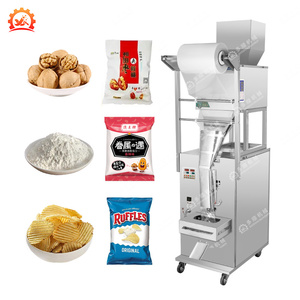
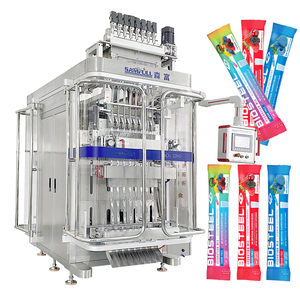
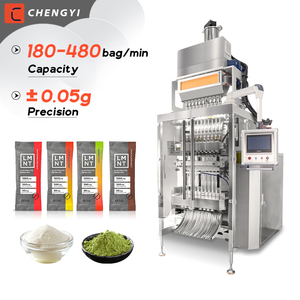
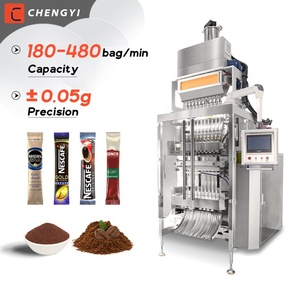
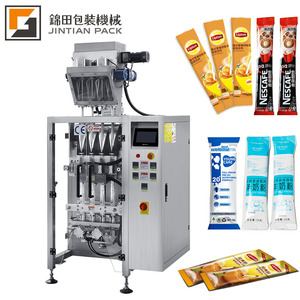
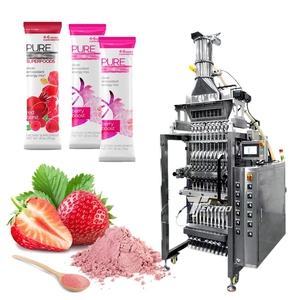
- Multi-Lane Stickpack & Sachet VFFS Machines: Designed for high-volume powders (hydration mixes, instant coffee, dietary protein, collagen) and viscous liquids. Utilizing a single wide roll of packaging laminate, the machine slits the film longitudinally into multiple tracks (from 2 up to 16 lanes), forms vertical tubes, performs bottom and vertical sealing, accurately dispenses dose quantities via servo augers or volumetric cups, and seals the top edge before cutting.
2. Dosing Systems and Volumetric Accuracy Metrics
The structural heart of any automatic strip or stickpack machine lies in its dosing mechanism. Product bulk density fluctuations, hygroscopic characteristics, flowability indexes (Carr's Index and Hausner Ratio), and dusting propensity dictate the choice of dosing technology:
| Dosing Mechanism |
Target Material Profile |
Accuracy Range |
Key Engineering Advantages |
Maintenance Profile |
| Servo-Driven Auger Filler |
Fine Powders, Protein, Hydration Mixes, APIs |
±0.3% – ±0.8% |
Individual lane servo control; dust extraction hoods; vacuum feeding; continuous anti-bridging agitation. |
CIP/SIP compliant; tool-less auger removal for rapid washdown. |
| Volumetric Oscillating Cup |
Free-Flowing Granules, Salt, Sugar, Seeds |
±0.5% – ±1.2% |
High-speed mechanical simplicity; low operational wear; cost-effective for stable bulk densities. |
Minimal spare part replacement; quick changeover cup sets. |
| Peristaltic & Rotary Piston Pumps |
Viscous Liquids, Honey, Gel Supplements, Ketchup |
±0.2% – ±0.5% |
Zero cross-contamination flow paths; drip-free shutoff nozzles; micro-metering precision. |
Sanitary tri-clamp fittings; automated clean-in-place cycles. |
3. Film Barrier Dynamics & Thermal Sealing Quality Assurance
Active pharmaceutical ingredients (APIs) and sensitive probiotic powders degrade rapidly when exposed to atmospheric oxygen or moisture vapor. Top-tier Chinese machinery factories integrate advanced thermal sealing matrices designed to protect product integrity:
Oxygen Transmission Rate (OTR) & Water Vapor Transmission Rate (WVTR): To maintain an effective barrier, sealing jaws must operate with precise control over three parameters: temperature, pressure, and dwell time. Modern multi-lane machines feature independent PID temperature zones for each sealing jaw segment, ensuring uniform heat distribution across all lanes even at linear speeds exceeding 60 cycles per minute.
Ultrasonic vs. Thermal Contact Sealing: While traditional thermal contact heating remains dominant for standard laminates (PET/ALU/PE, PET/NY/PE), ultrasonic sealing technology is increasingly adopted for heat-sensitive nutraceuticals and sustainable monomaterial films (such as recyclable Polyolefin). Ultrasonic sealing generates localized friction heat strictly within the inner sealant layer, eliminating thermal degradation of adjacent powder particles and preventing seal contamination caused by dusting.
4. Future Procurement Trends in Packaging Automation (2025–2030)
As industrial automation shifts toward Industry 4.0 paradigms, purchasing teams sourcing from China must evaluate equipment against four forward-looking technological shifts:
- Trend 1: AI Vision Inspection & Real-Time Leak Detection: Leading Chinese factories now integrate high-resolution CCD camera arrays directly downstream from the cutting station. These systems perform 100% inline quality checks—detecting micro-pinholes, seal wrinkles, missing tablets, misaligned lot codes, and barcode errors at speeds up to 1,200 pouches per minute.
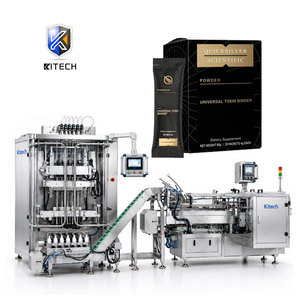
- Trend 2: Turnkey Line Integration (Form-Fill-Seal to Cartoning): Sourcing standalone vertical packaging machinery creates integration bottlenecks. Sourcing leaders prioritize single-source suppliers offering synchronized downstream packaging—where multi-lane stickpack machines link via robotic pick-and-place transfer systems directly into automatic cartoning and case-packing modules.
- Trend 3: Monomaterial & Biodegradable Laminate Compatibility: Worldwide environmental regulations (such as EU Packaging and Packaging Waste Regulation - PPWR) demand a shift away from traditional foil laminates toward recyclable paper-based or mono-PE structures. Advanced machinery incorporates tension-controlled servo unreelers and low-inertia sealing jaws specifically calibrated for low-tensile eco-friendly films.
- Trend 4: OEE Analytics & Remote Maintenance Interfaces: Smart PLCs equipped with OPC-UA protocols allow real-time monitoring of Overall Equipment Effectiveness (OEE). Machine diagnostics, thermal trends, vibration signatures, and preventive maintenance alerts are transmitted directly to cloud platforms or plant-wide SCADA systems.