Knowledge Center

Roll Forming Technical Blog & Industry News

Explore expert articles, machinery updates, technical guides, and industry insights from ReformMak.

0%

Choosing a Sugar Stick Packaging Machine is not only a decision about speed. It is a decision about consistency, hygiene, material control, and daily production discipline. Each narrow sachet must receive an accurate sugar dose, form a clean seal, and move smoothly through the line. A small sealing defect can create product waste, customer complaints, and unnecessary downtime.

Packaging engineer Mark C. Hargrove explains, “A reliable sugar packaging line protects product consistency before it tries to maximize production speed.” This practical view matters. A well-designed Sugar Stick Packaging Machine can handle controlled filling, precise film tracking, date coding, cutting, and collection within one coordinated process. Operators gain clearer control over production data. Maintenance teams can also identify problems earlier, especially around sensors, sealing jaws, and feeding systems.

There is a catch.

The fastest machine is not always the best machine. Buyers must compare sugar characteristics, stick dimensions, film structure, electrical standards, cleaning access, and available technical support. A machine that performs well in a factory trial may struggle with humidity, powder flow, or changing packaging materials. That detail is easy to underestimate.

Real experience should guide the purchase. Request sample testing, inspect finished seals, and measure waste during extended operation. Ask how quickly worn parts can be replaced. A dependable Sugar Stick Packaging Machine should fit the product, the workforce, and the long-term production plan, not merely impress during a short demonstration.
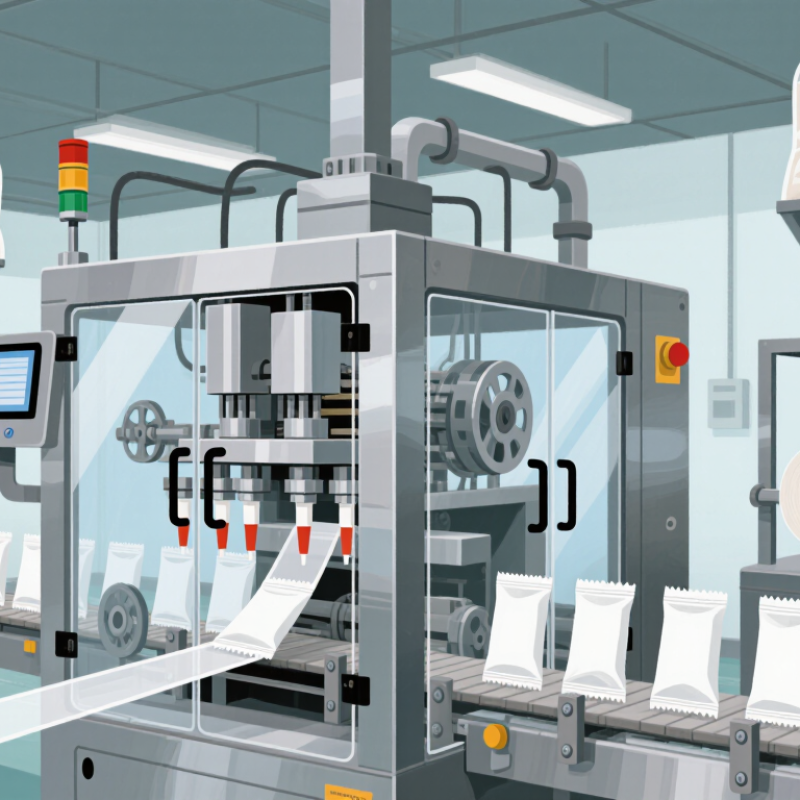
Why Choose a Sugar Stick Packaging Machine?

What Is a Sugar Stick Packaging Machine?

What Is a Sugar Stick Packaging Machine?

A sugar stick packaging machine is an automated form-fill-seal system for single-use sugar portions. It measures granulated sugar, forms film into narrow tubes, seals the edges, and cuts individual sticks. Many models also add date coding, film tracking, dust control, and checkweighing. The process resembles a precise conveyor rhythm. Sugar flows through a hopper, enters measured pockets, and reaches the sealing jaws within seconds.

The correct filling method depends on sugar crystal size, moisture, and target weight. Volumetric fillers suit stable granules, while weighing systems can improve accuracy. Hygienic stainless-steel surfaces support routine cleaning. Tool-free changeovers also reduce product residue between production runs. According to the Smithers report The Future of Global Packaging to 2028, the worldwide packaging market is expected to exceed 1.2 trillion dollars by 2028. That growth reflects stronger demand for efficient, portion-controlled packaging.

Packaging machinery is also receiving serious investment. The 2023 PMMI U.S. Packaging Machinery Shipments Report valued industry shipments at about 10.2 billion dollars in 2022. Still, a sugar stick machine is not a magic box. Poor film tension can create weak seals. Humidity can affect flow. Operators must test seal strength, weight variation, and waste rates during real production. A faster machine may look better on paper. It may not perform better in every facility. Reliable results come from matching machine design, material behavior, sanitation routines, and operator experience.

How Does the Packaging Process Work?

Why Choose a Sugar Stick Packaging Machine?

A sugar stick packaging machine turns loose granules into clean, measured single-serve packs. The process begins with a food-grade hopper. An auger or volumetric cup measures each dose. Accuracy matters because small weight errors multiply across thousands of packs.

The film unwinds under controlled tension. A forming collar shapes it into a narrow tube. Heated jaws create the longitudinal seal, while horizontal jaws close and cut each stick. Sensors check film position, seal quality, and missing packs. Date coding and metal detection can follow before cartoning. The finished sticks should feel firm, dry, and evenly sealed.

Powder creates the real challenge. Sugar dust can affect sensors, seals, and operator visibility. Good machines therefore use dust control, guarded dosing areas, and easy-clean contact parts. The Food and Agriculture Organization estimates that 13.2% of food is lost between harvest and retail. Better portion control and protective packaging can help reduce handling losses, although packaging alone cannot solve them.

PMMI reported North American packaging machinery shipments of about US$10.2 billion in 2023. Its industry outlook also identifies labor availability and automation as major investment pressures. That explains the demand for stable, repeatable filling systems. Still, no machine removes every risk. Film humidity, crystal size, and poor calibration can reduce accuracy. Operators must verify weights regularly, even when the screen shows normal operation. That small discipline is easy to skip. It should not be.

What Benefits Does This Machine Provide?

A sugar stick packaging machine brings measurable control to a small product. Each stick receives a consistent portion, which helps reduce underfilling, customer complaints, and product loss. According to PMMI’s 2024 State of the Industry report, labor availability remains a major concern for packaging manufacturers. Automated filling and sealing can reduce repetitive manual work while maintaining steady output. The improvement is practical. Operators can focus on quality checks, material changes, and sanitation.

Speed is another benefit. Depending on format and product characteristics, modern stick-pack systems can produce hundreds of sealed packs per minute. Industry data from Grand View Research values the global food packaging market at more than 560 billion US dollars in 2023, showing the scale of demand for efficient packaging equipment. A well-configured machine also supports accurate film tracking, strong seals, date coding, and batch traceability. These details matter when sugar dust collects around the sealing area. Still, automation is not magic. Poor calibration can create waste faster than manual packing.

Tips: Select a machine with adjustable dosing, easy-clean contact parts, and accessible sealing units. Test several sugar grades before purchase. Fine crystals may flow differently from coarse crystals. Keep a record of fill-weight checks, seal temperatures, and rejected packs. PMMI’s 2023 report on automation trends emphasizes data visibility as a key improvement area. Simple production records can reveal drift early, although they require disciplined staff training.

Why Choose a Sugar Stick Packaging Machine?

A packaging machine can increase output, reduce repetitive manual work, and provide more consistent stick-pack production.

Typical planning figures for sugar-stick production: actual output depends on product characteristics, stick size, filling volume, and machine configuration.

Which Features Should Buyers Consider?

Why Choose a Sugar Stick Packaging Machine?

Which Features Should Buyers Consider?

Choosing a sugar stick packaging machine requires more than checking its maximum speed. Buyers should examine dosing accuracy, sealing stability, film compatibility, and cleaning access. A small weight error becomes costly when thousands of sticks leave the line. Accuracy matters.

Grand View Research estimated the global flexible packaging market at USD 201.3 billion in 2022. Its continued growth increases pressure on manufacturers to reduce waste and maintain consistent output. Look for servo-driven dosing and real-time adjustment systems. These features can improve portion control, although they cannot correct poor calibration.

Cleanability matters. Sugar dust can settle around hoppers, sensors, and sealing jaws. Tool-free access, stainless-steel contact parts, and controlled dust removal simplify daily sanitation. Buyers should also inspect the machine’s changeover process. A practical system should switch film widths and product formats without lengthy manual adjustments. Smithers’ Future of Global Flexible Packaging to 2029 highlights efficiency and material optimization as important market directions.

Operator training is another overlooked feature. A sophisticated interface may still confuse new staff. Clear alarms and stored recipes reduce avoidable mistakes. Integration with checkweighers and date coding improves traceability. However, automation is not always the best answer. A smaller operation may gain more from reliable maintenance access than extreme output speed. That is where many purchasing decisions become imperfect.

Where Are Sugar Stick Packaging Machines Used?

Sugar stick packaging machines are used wherever measured, hygienic sweetener portions improve service speed. Coffee shops, hotels, restaurants, catering companies, and office pantries use them beside brewing stations. Each stick offers a consistent quantity, reducing open-bowl handling and messy counters.

Coffee service is a major application. The International Coffee Organization reported global coffee consumption of 177.9 million 60-kilogram bags in its 2023/24 report. That volume supports demand for convenient portion packaging in cafés, workplaces, transport lounges, and hospitality venues. Machines also serve food factories producing private-label sugar sticks for supermarkets and food-service distributors. Some facilities package powdered sweeteners, but material compatibility must be tested carefully.

Speed matters here.

A suitable machine can form, fill, seal, print, and cut individual sachets in one continuous process. The exact output depends on stick size, sugar flow, film structure, and operator skill. Grand View Research valued the global food packaging market at about USD 562.1 billion in 2023, showing the scale of automated packaging demand. Still, market size does not guarantee a good investment. A small café may need compact equipment, while a central production site may require multi-lane filling and inspection systems. In practice, cleaning access and accurate weight control are often overlooked. That can become an expensive lesson.

Why Choose a Sugar Stick Packaging Machine? – Where Are Sugar Stick Packaging Machines Used?

Application Area Typical Products Why Stick Packaging Is Suitable Common Pack Size Useful Machine Features Typical Production Considerations
Hotels and Hospitality White sugar, brown sugar, raw sugar, and sweetener sticks Clean single servings are convenient for guest rooms, breakfast areas, cafés, and beverage stations. 3–8 g per stick Accurate volumetric dosing, easy film changeover, compact footprint, and low operator workload Consistent fill weight and reliable sealing are important for high-frequency daily use.
Coffee Shops and Beverage Counters Granulated sugar, cane sugar, and low-calorie sweeteners The narrow package is easy to store beside cups and can be opened with a simple tear. 2–6 g per stick High-speed sachet forming, filling, sealing, cutting, and date or batch coding The film must feed smoothly and maintain stable seal temperature during continuous operation.
Restaurants and Catering Standard sugar sticks, portion-controlled sweeteners, and catering packs Individual portions support hygienic service and help reduce open-container handling. 3–10 g per stick Adjustable dosing, strong longitudinal and end seals, stainless-steel contact parts, and easy cleaning The selected pack size should match menu requirements and portion-control standards.
Airlines, Railways, and Travel Services Sugar sticks for tea, coffee, snack trays, and meal services Lightweight, individually sealed packs are easy to distribute and help limit spillage during transport. 3–5 g per stick Compact equipment design, dependable cutting, accurate counting, and integration with secondary packing Pack integrity and low product dust are important for handling, storage, and onboard service.
Retail and Supermarket Products Multipacks of white sugar, brown sugar, organic sugar, or alternative sweeteners Stick packs offer portion control and can be grouped into branded or private-label retail bundles. 3–10 g per individual pack; multipacks vary Film-print registration, batch coding, counting, and connection to cartoning or bundling equipment Retail packaging requires clear labeling, traceability, and suitable food-contact packaging materials.
Foodservice Distributors Bulk cartons containing individually wrapped sugar sticks Standardized portion packs simplify inventory control and distribution to multiple foodservice locations. 3–8 g per stick High uptime, automatic counting, conveyor discharge, and compatibility with case packing Equipment capacity should be selected according to order volume, shifts, and required pack formats.
Healthcare and Institutional Catering Individually sealed sugar and approved sweetener portions Sealed portions support controlled distribution in hospitals, care facilities, schools, and public institutions. 2–6 g per stick Hygienic construction, guarded moving parts, controlled dosing, and straightforward sanitation procedures Materials, cleaning practices, and production controls should comply with applicable food-safety requirements.
Sugar and Sweetener Processing Plants Conventional sugar, specialty sugars, and powdered or granular sweetener products Automated stick packaging supports repeatable portioning and efficient use of flexible packaging film. 2–10 g per stick Multi-lane operation, servo-controlled film transport, auger or volumetric dosing, and automatic fault detection Product flowability, particle size, moisture, and bulk density affect dosing accuracy and machine settings.
General selection note: Actual output depends on the number of lanes, fill weight, sugar characteristics, packaging-film properties, sealing temperature, and operator settings. The pack-size ranges shown are common practical ranges rather than universal machine limits.

FAQS

How does a sugar stick packaging machine work?

Loose granules enter a food-grade hopper. An auger or cup measures each dose, while film forms, seals, and cuts each stick.

How is the sugar quantity controlled?

The dosing system measures each portion by volume or weight. Operators should verify sample weights regularly because small errors multiply quickly.

What happens to the packaging film?

The film unwinds under controlled tension and wraps around a forming collar. Heated jaws create the long seal, then horizontal jaws close and cut each pack.

How does the machine check package quality?

Sensors monitor film alignment, seal condition, and missing packs. Date coding and metal detection may follow before cartoning.

Why is sugar dust a problem?

Dust can cover sensors, weaken seals, and reduce operator visibility. Guarded dosing areas and easy-clean contact parts help, but dust control is never perfect.

Where are sugar stick machines commonly used?

Cafés, hotels, restaurants, caterers, offices, factories, and service counters use them. A stick beside a coffee cup keeps portions clean and consistent.

Can one machine handle every sugar type?

Not necessarily. Crystal size, flow behavior, and humidity affect accuracy. Powdered materials require compatibility testing before regular production.

What should buyers consider before choosing equipment?

Match the machine to stick size, output needs, film structure, and available space. Compact equipment may suit a small café, while larger sites need multiple filling lanes.

Does automation remove operating risks?

No machine removes every risk. Calibration, cleaning, and weight checks still matter, even when the display appears normal.

Can packaging alone reduce food loss?

Better portion control and protective packs can reduce handling losses. Packaging alone cannot solve every source of waste.

Conclusion

A Sugar Stick Packaging Machine is a specialized system designed to measure, fill, seal, and cut individual portions of granulated sugar into slim, convenient stick packs. The process typically begins with accurate product dosing, followed by forming packaging material around the sugar, sealing the edges, and separating each finished stick for collection. Automated controls help maintain consistent portion sizes, clean operation, and efficient production.

When choosing a machine, buyers should consider filling accuracy, production speed, packaging material compatibility, sealing quality, ease of operation, cleaning requirements, and maintenance access. A reliable system can reduce manual labor, limit product waste, improve packaging consistency, and support a more organized workflow. Sugar stick packaging machines are commonly used in cafés, restaurants, hotels, catering services, retail packaging operations, and food manufacturing facilities where single-serve portions are practical. The right equipment should match the desired output, product characteristics, available space, and long-term production needs.

Ethan

Ethan

Ethan is a professional marketing specialist with a strong understanding of product strategy, customer needs, and digital communication. As a key member of the company’s marketing team, he combines industry knowledge with practical experience to explain complex product features in a clear,......