Explore expert articles, machinery updates, technical guides, and industry insights from ReformMak.
Choosing a China Best Volumetric Cup Stick Pack Machine Supplier starts with the product, not the brochure. The machine must handle the powder’s flow, target fill weight, stick-pack dimensions, and required production speed. A volumetric cup system measures by volume, so changes in density or particle size can affect the filled weight. That trade-off deserves a clear discussion. Small details matter.
Grand View Research valued the global flexible packaging market at USD 261.4 billion in 2022 and projected a 4.4% compound annual growth rate from 2023 to 2030 in its Flexible Packaging Market report. This broad market figure is not a forecast for stick-pack machines, but it reflects the scale of demand for flexible formats. For buyers, the practical question is whether a supplier can demonstrate stable filling on the actual product. Ask for test results, sample packs, changeover times, and cleaning instructions. No machine is perfect.
A qualified supplier should also explain cup sizes, dosing adjustments, sealing temperature controls, and the limits of the quoted output rate. Request a factory acceptance test using your material, then check fill-weight consistency across repeated runs. Ask how spare parts and operator training are handled after installation. A Volumetric Cup Stick Pack Machine may suit free-flowing powders or granules, but it is not automatically right for every product. Still, published specifications cannot replace a product trial. That is easy to overlook.
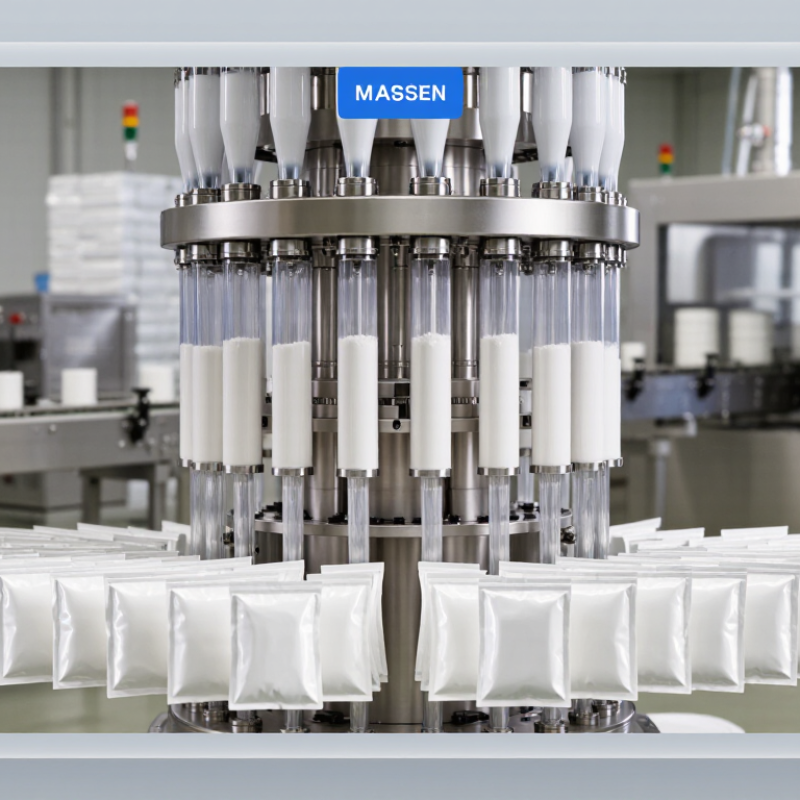
A volumetric cup stick pack machine measures product by volume, not by weighing every dose. A fitted cup fills with a set amount of product, then releases it into a narrow film tube. The machine forms the stick pack, seals its edges, and cuts individual sachets. It is commonly used for free-flowing powders, granules, and similar materials.
The key detail is bulk density. A cup holding the same volume can produce different weights if a powder settles, absorbs moisture, or changes texture. Not every powder flows well.
Operators may adjust cup size, filling speed, and vibration, then check sample weights during production. A practical test uses the actual product, not just a sample with a similar appearance. This helps reveal bridging, dust, or uneven filling before a long run begins.
There is a trade-off: volumetric filling can be simple and fast, but weight consistency depends on stable product flow. Even careful setup has limits. Some products need additional feeding or dosing adjustments, and that can be easy to underestimate.
China Best Volumetric Cup Stick Pack Machine Supplier
How Does Volumetric Cup Dosing Work in Stick Packaging?
A volumetric cup measures product by space, not weight. On a stick pack line, product flows into a cup set to a chosen volume. A scraper levels the cup, then its contents drop into the forming tube before the film seals. The cycle repeats for each stick. Simple, but product behavior matters.
Powder with uneven particle size, changing moisture, or poor flow can leave cups underfilled or cause inconsistent weights. Operators should test the actual product, check samples across a run, and adjust cup volume when bulk density changes. Small detail. FAO’s 2019 The State of Food and Agriculture estimated that about 14% of food is lost between post-harvest and retail. That figure is not specific to packaging or dosing, but it shows why careful handling and portion control deserve attention. A cup setting alone cannot guarantee a target weight. Frankly, this is where specifications can look better on paper than on a busy production floor. Regular checks help reveal that gap.
A volumetric cup measures product by volume: the cup fills from the hopper, excess material is leveled, and the measured portion drops into the stick pack. This chart uses the relationship dose mass = cup volume × bulk density, with an illustrative bulk density of 0.60 g/mL. Actual fill weight depends on the product’s bulk density and how it settles in the cup.
Volumetric cup stick pack machines suit products that flow consistently: sugar, salt, rice granules, seeds, instant coffee crystals, and powdered drink mixes with stable bulk density. A measured cup drops a repeatable volume into each stick; it does not directly guarantee an identical weight when product density changes. That matters on a line packing fine seasoning beside coarse crystals. The Food Packaging Market report from Grand View Research valued the global market at US$456.3 billion in 2023, reflecting the broad demand for packaged food formats. But market growth alone does not prove a particular product will run well.
Food and beverage producers are common users, especially for single-serve ingredients, beverage sachets, and portion packs for food service. Personal-care and household manufacturers may use stick packs for bath salts, powdered cleaners, or other free-flowing dry products, subject to material and packaging compatibility checks. Nutraceutical powders are another application; Grand View Research’s 2023 Nutraceuticals Market report estimated that market at US$454.55 billion. A useful trial should check fill-weight variation, dust, sealing quality, and product flow at realistic speeds. Fine, cohesive powders can bridge or spill from volumetric cups, so an auger filler may be a better fit. Not every stick-pack product belongs on the same machine.
When evaluating a Chinese volumetric cup stick pack machine supplier, look beyond the quoted speed. Grand View Research estimated the global packaging machinery market at USD 45.75 billion in 2022, with a projected 4.2% annual growth rate through 2030. That broad market figure signals investment, not machine quality. Ask for a factory acceptance test using your actual product, target cup volume, and packaging film.
Check dose variation across repeated runs, not just the average. Request recorded results at different speeds, plus samples showing seal quality and cut alignment. Numbers matter. Confirm which product-contact parts are stainless steel and how operators can clean them. Ask for electrical drawings, manuals, spare-parts lists, and response times for remote support. A polished brochure is not proof.
Review the supplier’s quality procedures and request relevant certificates for the manufacturing site and machine. Then speak with customers running similar powders or granules, if references are available. Watch the seals. A small leak during a short trial can become costly after long production shifts. I would also clarify warranty exclusions in writing; this detail is easy to overlook. A supplier may offer attractive pricing, but unclear acceptance criteria can leave both sides arguing over performance. Test the machine with your own material before approving shipment.
When comparing volumetric cup stick-pack machines, test with your actual product, not an empty machine. Granule size, bulk density, and humidity can all shift fill weights. Ask suppliers to record weight variation across repeated runs, alongside speed and reject rates. Small details matter. Check whether cup changes and film adjustments are manageable for the operators who will run the line each shift.
Compare models at your required output, then inspect seal quality, changeover time, and cleaning access. A fast cycle is less useful if product dust collects around the dosing cups or adjustments take too long. PMMI’s 2024 State of the Industry report puts North American packaging machinery shipments at about $10.9 billion in 2023, reflecting a substantial market investing in production equipment. That figure does not identify the right machine for your product; a factory trial does. Test it live.
Service deserves the same scrutiny as hardware. Ask for a written response-time target, local spare-parts availability, operator training, and clear escalation steps. The International Federation of Robotics reported 4,281,585 industrial robots operating worldwide in 2023, 10% more than in 2022. Automation is expanding, but that does not mean every stick-pack line needs complex integration. Check whether the machine can share useful fault and production data with your existing systems. I would also ask what maintenance tasks your team can realistically handle; that answer is easy to overlook, and sometimes uncomfortable.
Product fills a cup set to a chosen volume. A scraper levels it, then the contents drop into the forming tube. The film seals each stick. Simple cycle.
No. It measures space, not weight. Changes in moisture, particle size, or bulk density can shift fill weights. Check samples during production.
Free-flowing products often run well, including sugar, salt, rice granules, seeds, and instant coffee crystals. Stable flow helps each cup fill consistently.
Some can, but cohesive powders may bridge or spill. Test the actual powder at realistic speeds. An auger filler may suit difficult products better.
Record fill-weight variation, operating speed, and reject rates across repeated runs. Also inspect dust, seal quality, and product flow. A short trial can miss problems.
Check changeover time, cleaning access, and how easily operators adjust cups and film. Look closely at dust around dosing cups. Small maintenance tasks can become daily frustrations.
Request written response-time targets, spare-parts availability, operator training, and clear escalation steps. Ask which maintenance jobs your team can handle. That answer may be uncomfortable, but useful.
Not always. A fast cycle helps only if fills stay consistent and seals hold. A slower line with fewer rejects may perform better. Test it live.
A Volumetric Cup Stick Pack Machine is designed to measure products by volume and fill them into narrow, single-serve stick packs. Its dosing system uses cups sized for a target portion: product flows into each cup, excess material is leveled, and the measured dose is released into the packaging material before it is sealed and cut. This approach can support consistent output for suitable free-flowing powders and granules, with performance influenced by product characteristics, cup configuration, and machine settings.
These machines serve applications across food, beverage, nutrition, and other consumer-product industries. When evaluating a Chinese supplier, consider manufacturing experience, customization options, quality-control procedures, technical documentation, and the availability of installation, training, spare parts, and after-sales support. Compare machine models by capacity, dosing accuracy, pack dimensions, changeover requirements, materials of construction, automation features, and compatibility with your product. A clear assessment of production goals and service needs can help identify a machine that fits both current operations and future requirements.