Explore expert articles, machinery updates, technical guides, and industry insights from ReformMak.
Choosing the best Ketchup Filling Packaging Machine in China requires more than comparing prices or advertised speed. The right equipment must match sauce viscosity, bottle shape, filling volume, production scale, and cleaning expectations. A thick ketchup may move slowly through narrow pipes, leaving residue around valves and nozzles. That small detail can affect accuracy, hygiene, and daily output.
Jorge Izquierdo, a packaging-industry specialist associated with PMMI, has offered a practical principle: “The best machine is not always the fastest machine; it is the one that fits the process.” This idea matters when evaluating Chinese suppliers. A reliable Ketchup Filling Packaging Machine should provide stable piston or servo filling, adjustable speed, drip control, and straightforward sanitation access. It should also support suitable sealing, labeling, and date-coding systems.
Experience changes the decision.
A machine that performs well during a factory demonstration may struggle with cold ketchup, uneven bottles, or frequent product changes. Buyers should request sample testing using their actual sauce, containers, and target fill weights. They should inspect weld quality, electrical components, spare-parts availability, and after-sales support. Certifications and technical documents also deserve careful review.
There is no universal “best” model. That assumption is worth challenging. The strongest choice is the machine that delivers repeatable fills, manageable maintenance, and safe operation within a specific production environment. This guide examines those practical factors, helping food manufacturers compare Chinese equipment with clearer expectations and fewer costly surprises.
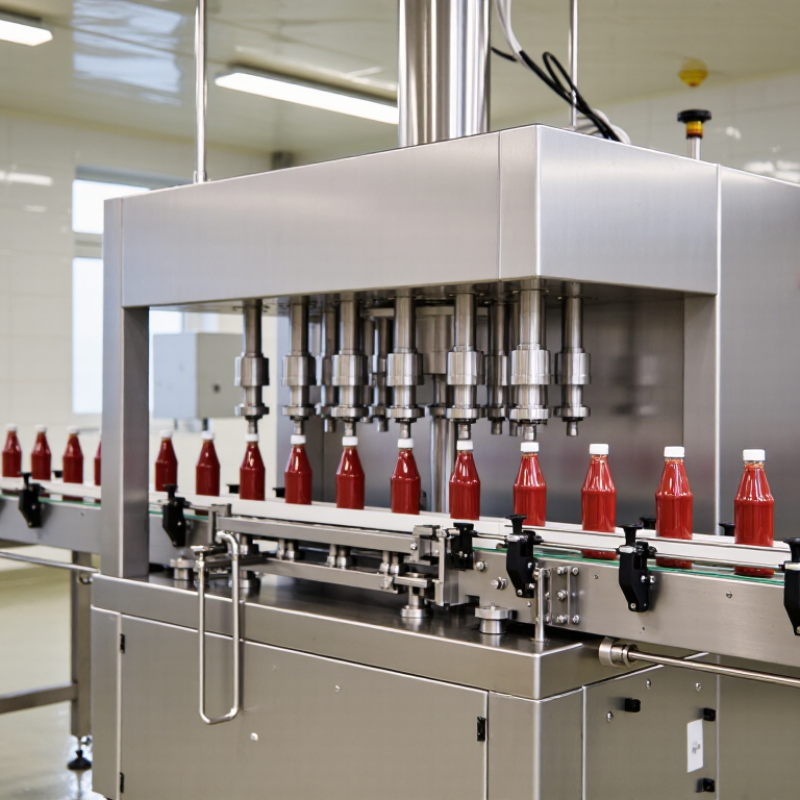
The best choice is not always the fastest machine. It should match ketchup viscosity, bottle size, production volume, and cleaning routines. In practical testing, ketchup may flow slowly when cold and drip after filling. A suitable machine uses accurate piston or servo control to maintain consistent portions. Food-grade stainless steel, smooth welds, and easy access reduce contamination risks. Operators should also check changeover time, filling speed, and sealing performance with real ketchup samples.
A reliable supplier provides test records, operating instructions, spare-part details, and responsive technical support. Ask for a factory trial using your actual bottles and sauce formula. Watch the nozzle closely. Does it stop cleanly? Does the cap remain dry? These small details affect waste, shelf appearance, and customer trust. Compliance documents and traceable quality checks also support safer purchasing decisions.
Tips: Compare measured accuracy, not only advertised speed. Inspect cleaning steps in person. Request several hours of continuous testing. A machine may perform well during a short demonstration but struggle after repeated cycles. I would also leave room for adjustment, because ketchup formulas can change more than expected. The cheapest option may become expensive when seals wear quickly or operators need constant manual correction.
It should match the ketchup viscosity, bottle size, output, and cleaning routine. Fast is not always better. Accurate piston or servo dosing helps maintain consistent portions. Test the machine with real ketchup before purchasing.
Cold ketchup can move slowly and create uneven portions. A heated hopper may support smoother flow. Test different temperatures and observe fill accuracy. The result may still vary with the recipe.
Choose accurate anti-drip nozzles with clean shutoff performance. Watch whether the nozzle leaves strings or drops after filling. A dry cap and clean conveyor reduce waste. Small drips become visible quickly.
Food-contact areas should use suitable stainless steel, such as 316L. Polished welds and smooth surfaces reduce hiding places for residue. Avoid dead corners where dried ketchup may collect. Inspect the filling area closely.
Servo dosing, recipe storage, and automatic bottle detection can improve repeatability. The control system should record filling deviations and cleaning cycles. Useful data helps operators investigate waste. More automation is not always better.
Very important. Operators should reach pumps, product paths, seals, and nozzles without difficulty. Tool-free change parts can shorten adjustments. Cleaning-in-place systems reduce manual contact, but validation remains necessary.
Request a factory trial using your bottles and actual ketchup formula. Check several temperatures, bottle sizes, and production speeds. Ask for hours of continuous testing, not only a short demonstration. Short tests can hide later problems.
Request test records, operating instructions, spare-part details, and food-contact documents. Confirm installation training, remote support, and spare-part lead times. Speak with recent customers if possible. Polished videos are not enough.
Not necessarily. A low price may hide frequent seal replacement or manual corrections. Compare measured accuracy, cleaning time, changeover time, and service support. I would leave adjustment room because formulas can change unexpectedly.
Choosing the best Ketchup Filling Packaging Machine in China requires more than comparing price and output. The ideal solution should match the ketchup’s viscosity, bottle or pouch format, filling volume, and required production capacity. Common options include piston, servo-driven, and volumetric filling systems, each offering different advantages in accuracy, speed, and product compatibility. A well-designed machine should provide consistent filling performance while minimizing waste, splashing, and product residue.
Hygiene, automation, and maintenance are also essential considerations. Food-grade contact parts, easy-to-clean structures, reliable sealing, adjustable controls, and safety protection can improve production efficiency and reduce downtime. When selecting a Chinese supplier, buyers should evaluate manufacturing experience, customization capability, quality control, technical support, spare-parts availability, and after-sales service. A dependable Ketchup Filling Packaging Machine should deliver stable operation, precise packaging, convenient maintenance, and long-term value for different production environments.